BACK
DEC 10, 2025
Health Risk Assessment
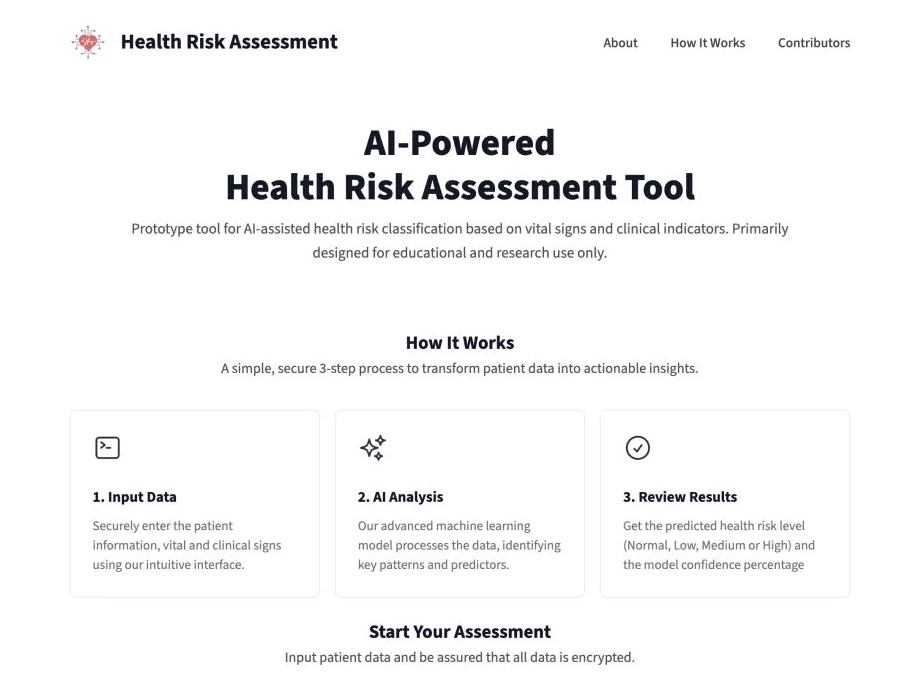
Over the last few weeks, my team and I took a raw clinical dataset and turned it into a fully functional health risk assessment web app as a project of our Machine Learning course.
Our tool is motivated by the NEWS2 (National Early Warning Score 2) protocol. However, while standard protocols rely on manual scoring, our tool leverages ML algorithms to classify risk levels automatically.
We didn't just want to train a model, but we wanted to build a complete end-to-end pipeline. We started with a dataset of vital signs and clinical indicators (RR, SpO₂, BP, etc.) and compared multiple algorithms, including SVM, KNN, and Random Forest, to find the best one.
𝗧𝗵𝗲 𝗧𝗲𝗰𝗵 𝗦𝘁𝗮𝗰𝗸 & 𝗪𝗼𝗿𝗸𝗳𝗹𝗼𝘄:
𝟭- 𝗗𝗮𝘁𝗮 & 𝗠𝗼𝗱𝗲𝗹𝗶𝗻𝗴: Scikit-learn Pipelines with a focus on data leakage prevention.
𝟮- 𝗨𝗜/𝗨𝗫: Designed in Figma and deployed in Streamlit.
𝟯- 𝗙𝗲𝗮𝘁𝘂𝗿𝗲𝘀: Real-time risk classification, PDF report generation, and an encryption demo to highlight privacy.
𝗧𝗵𝗲 𝗧𝗲𝗮𝗺 𝗘𝗳𝗳𝗼𝗿𝘁:
I had the pleasure of leading this project with Jehad Albarak and Ahmed Al naim.
- Jehad Albarak: led the deep dive into SVMs and PCA analysis to understand our feature space.
- Ahmed Al naim: optimized our KNN implementation and handled the comprehensive metrics evaluation.
- 𝗠𝘆 𝗙𝗼𝗰𝘂𝘀: I managed the pipeline architecture, notebook organization and documentation, the Random Forest implementation, and the deployment by taking our code from a Colab notebook to the live web app.
𝗧𝗿𝘆 𝗶𝘁:
https://lnkd.in/dMQ9J_w3
𝗖𝗹𝗮𝗿𝗶𝗳𝗶𝗰𝗮𝘁𝗶𝗼𝗻: This is a prototype tool for AI-assisted health risk classification based on vital signs and clinical indicators. It is primarily designed for educational and research use only.
Mohammed Aldosari
AI Engineer · Riyadh
DEC 10, 2025
Health Risk Assessment
Over the last few weeks, my team and I took a raw clinical dataset and turned it into a fully functional health risk assessment web app as a project of our Machine Learning course.
Our tool is motivated by the NEWS2 (National Early Warning Score 2) protocol. However, while standard protocols rely on manual scoring, our tool leverages ML algorithms to classify risk levels automatically.
We didn't just want to train a model, but we wanted to build a complete end-to-end pipeline. We started with a dataset of vital signs and clinical indicators (RR, SpO₂, BP, etc.) and compared multiple algorithms, including SVM, KNN, and Random Forest, to find the best one.
𝗧𝗵𝗲 𝗧𝗲𝗰𝗵 𝗦𝘁𝗮𝗰𝗸 & 𝗪𝗼𝗿𝗸𝗳𝗹𝗼𝘄:
𝟭- 𝗗𝗮𝘁𝗮 & 𝗠𝗼𝗱𝗲𝗹𝗶𝗻𝗴: Scikit-learn Pipelines with a focus on data leakage prevention.
𝟮- 𝗨𝗜/𝗨𝗫: Designed in Figma and deployed in Streamlit.
𝟯- 𝗙𝗲𝗮𝘁𝘂𝗿𝗲𝘀: Real-time risk classification, PDF report generation, and an encryption demo to highlight privacy.
𝗧𝗵𝗲 𝗧𝗲𝗮𝗺 𝗘𝗳𝗳𝗼𝗿𝘁:
I had the pleasure of leading this project with Jehad Albarak and Ahmed Al naim.
- Jehad Albarak: led the deep dive into SVMs and PCA analysis to understand our feature space.
- Ahmed Al naim: optimized our KNN implementation and handled the comprehensive metrics evaluation.
- 𝗠𝘆 𝗙𝗼𝗰𝘂𝘀: I managed the pipeline architecture, notebook organization and documentation, the Random Forest implementation, and the deployment by taking our code from a Colab notebook to the live web app.
𝗧𝗿𝘆 𝗶𝘁:
https://lnkd.in/dMQ9J_w3
𝗖𝗹𝗮𝗿𝗶𝗳𝗶𝗰𝗮𝘁𝗶𝗼𝗻: This is a prototype tool for AI-assisted health risk classification based on vital signs and clinical indicators. It is primarily designed for educational and research use only.
Mohammed Aldosari
AI Engineer · Riyadh
DEC 10, 2025
Health Risk Assessment
Over the last few weeks, my team and I took a raw clinical dataset and turned it into a fully functional health risk assessment web app as a project of our Machine Learning course.
Our tool is motivated by the NEWS2 (National Early Warning Score 2) protocol. However, while standard protocols rely on manual scoring, our tool leverages ML algorithms to classify risk levels automatically.
We didn't just want to train a model, but we wanted to build a complete end-to-end pipeline. We started with a dataset of vital signs and clinical indicators (RR, SpO₂, BP, etc.) and compared multiple algorithms, including SVM, KNN, and Random Forest, to find the best one.
𝗧𝗵𝗲 𝗧𝗲𝗰𝗵 𝗦𝘁𝗮𝗰𝗸 & 𝗪𝗼𝗿𝗸𝗳𝗹𝗼𝘄:
𝟭- 𝗗𝗮𝘁𝗮 & 𝗠𝗼𝗱𝗲𝗹𝗶𝗻𝗴: Scikit-learn Pipelines with a focus on data leakage prevention.
𝟮- 𝗨𝗜/𝗨𝗫: Designed in Figma and deployed in Streamlit.
𝟯- 𝗙𝗲𝗮𝘁𝘂𝗿𝗲𝘀: Real-time risk classification, PDF report generation, and an encryption demo to highlight privacy.
𝗧𝗵𝗲 𝗧𝗲𝗮𝗺 𝗘𝗳𝗳𝗼𝗿𝘁:
I had the pleasure of leading this project with Jehad Albarak and Ahmed Al naim.
- Jehad Albarak: led the deep dive into SVMs and PCA analysis to understand our feature space.
- Ahmed Al naim: optimized our KNN implementation and handled the comprehensive metrics evaluation.
- 𝗠𝘆 𝗙𝗼𝗰𝘂𝘀: I managed the pipeline architecture, notebook organization and documentation, the Random Forest implementation, and the deployment by taking our code from a Colab notebook to the live web app.
𝗧𝗿𝘆 𝗶𝘁:
https://lnkd.in/dMQ9J_w3
𝗖𝗹𝗮𝗿𝗶𝗳𝗶𝗰𝗮𝘁𝗶𝗼𝗻: This is a prototype tool for AI-assisted health risk classification based on vital signs and clinical indicators. It is primarily designed for educational and research use only.
Mohammed Aldosari
AI Engineer · Riyadh